
Mixed‑Media vs. Collage vs. Assemblage: Understanding the Differences
A simple guide to how these three art forms differ in materials, techniques, and creative intent
7/1/2025
Artists, myself included, often use the terms mixed‑media, collage, and assemblage interchangeably — but each describes a distinct creative approach.
If you’re exploring new techniques or trying to understand what kind of art you’re drawn to, knowing the differences can help you refine your own practice and discover new artists to follow.
Understanding these distinctions helps you communicate your artistic identity more clearly, whether you’re writing an artist statement, tagging your work online, or building a portfolio.
What is mixed‑media art?
Mixed‑media art is the broadest category. It refers to any artwork that combines two or more mediums — for example, paint with ink, charcoal with digital print, acrylic with embroidery, and so on.
The defining feature of mixed-media art is the intentional blending of materials to create a unified visual language. Mixed‑media pieces often emphasize texture, layering, and experimentation, making them a favorite for artists who enjoy pushing boundaries.
Mixed‑media art has a long history, and several well‑known artists exemplify the power of combining multiple materials and techniques. Robert Rauschenberg is famous for merging painting, photography, printmaking, and found objects in his groundbreaking works. Julie Mehretu creates large‑scale mixed‑media pieces that layer drawing, painting, mapping, and digital elements into dynamic compositions. Njideka Akunyili Crosby blends painting, photo transfers, textiles, and patterned surfaces to explore themes of identity and cultural hybridity.
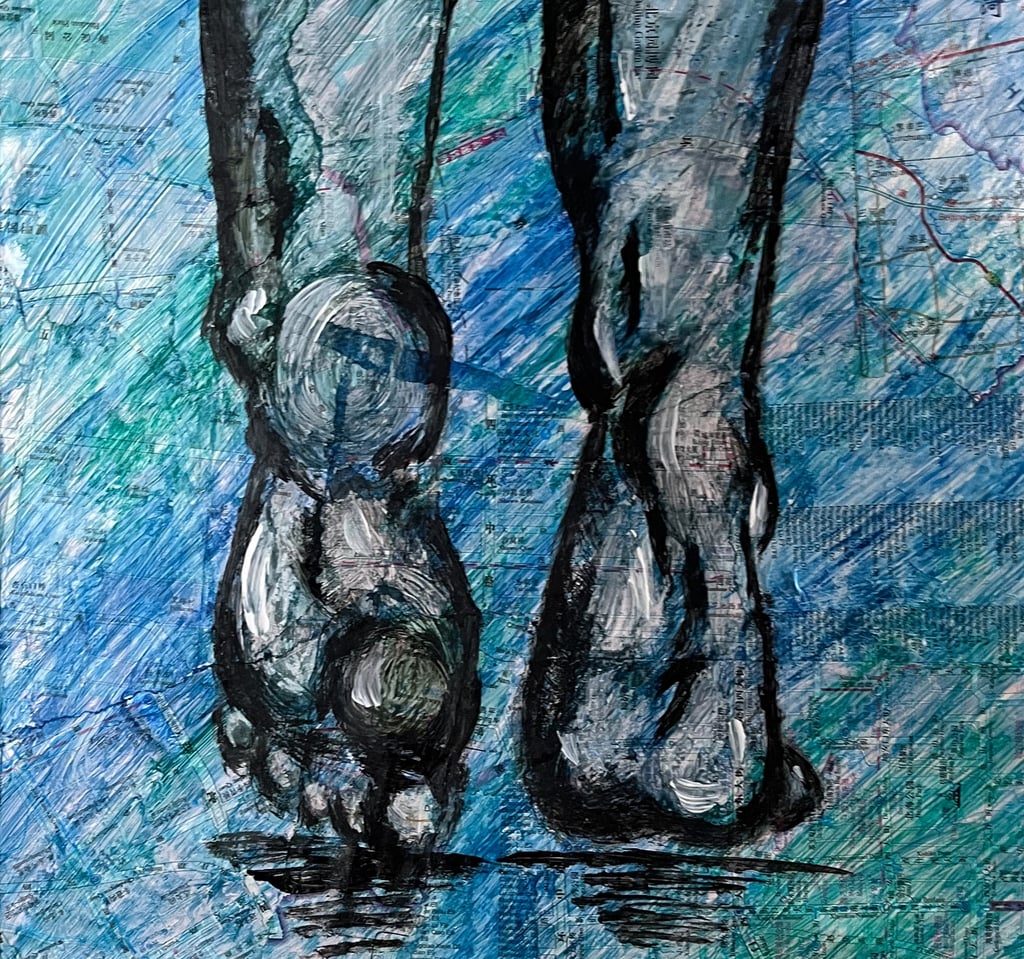
I call myself a mixed-media artist because I like to incorporate a variety of materials and techniques into my work. For example, in the artwork at the top of this page ('When to walk away'), I combined collected train and plane tickets, acrylic paint, charcoal, and chalk to create a layered effect that conveys ideas around travel, movement, and distance.
How is collage different from mixed‑media art?
Collage is technically a type of mixed-media art, but it has a more specific focus: assembling flat materials onto a surface. Think paper scraps, magazine cutouts, fabric, maps, or found ephemera.
With collage, it's all about composition: how shapes, colors, and fragments interact to form something new. It’s a powerful way to explore narrative, memory, and visual rhythm, and it’s accessible to beginners because it requires minimal tools.
Hannah Höch, a pioneering Dada artist, used photomontage to challenge social norms and political structures with bold, fragmented imagery. Romare Bearden brought collage into the spotlight through richly textured scenes that celebrate African American life, using cut paper, photographs, and painted elements.
It's an art form I use on occasion, where I feel that the materials are interesting in their own right; or, where the texture of the materials don't benefit from additional layers of paint or pen, etc. For me, collage is much more about the intentionality behind the material preparation.
For example, in the artwork at the bottom of this page, 'Seasaw', I had a specific idea of what I wanted to create and looked for paper and card that could bring that vision to life. I utilized magazines, pamphlets, flyers and even old gift bags and wrapping paper to find the right colors and textures, and then carefully tore (because I wanted to create a natural landscape that reflected the choppiness of the ocean, I didn't want the harsh lines of scissor cuts) the various papers into shapes and sizes I needed.
What makes assemblage a unique art form?
Of the three art forms, assemblage is the one I have the least familiarity with. Assemblage takes the idea of collage into three dimensions — so instead of flat materials, it incorporates objects like wood, metal, plastic, textiles, or everyday items that carry their own history.
These works often have sculptural qualities and invite viewers to consider the relationship between objects and meaning. Assemblage can feel raw, tactile, and deeply personal, especially when it incorporates found or repurposed materials.
Several well‑known artists have defined the genre through their inventive use of found objects: for example, Joseph Cornell is celebrated for his poetic shadow boxes filled with ephemera, trinkets, and miniature worlds that invite viewers into intimate, dreamlike spaces. Louise Nevelson is known for her monumental wooden assemblages, constructed from discarded materials and unified with monochrome paint to create dramatic sculptural environments, while artist Betye Saar uses found objects to build powerful, narrative assemblages that explore themes of race, spirituality, and personal history.
Cheat sheet: Mixed‑Media vs. Collage vs. Assemblage
Mixed‑Media Art: Combines two or more artistic mediums.
Collage: A type of mixed‑media that focuses on arranging and adhering flat materials onto a surface to form a new composition.
Assemblage: A three‑dimensional art form that uses found objects and materials to build sculptural works that extend off the surface.
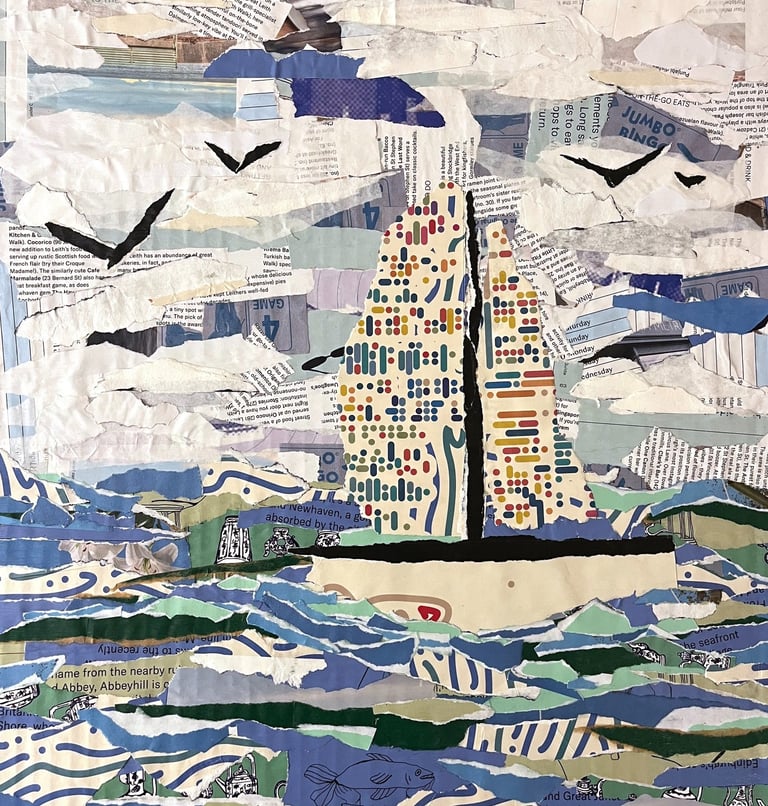
'Seasaw' by Zabeth Spayne (Mixed-media collage, paper on cardboard, 2025)
'When to walk away' by Zabeth Spayne (Mixed-media with paper, acrylic, charcoal, and chalk on canvas, 2017)

Subscribe to Zab's newsletter
Zab wants to send updates straight to your inbox. No spam, she hates that too. Just upcoming events, creative inspo, and ofc, what she's been working on.